Trends that are influencing the future of higher education top the list

Trends that are influencing the future of higher education top the list
The field of higher education is undergoing a period of rapid change. As a result of developments in technology, shifts in the labor market, and alterations in the expectations of students, the operations of colleges and universities are undergoing a transformation. It is becoming increasingly common for more adaptable, individualized, and globally networked educational systems to take the place of the conventional educational model, which is characterized by lectures, textbooks, and physical classrooms. Students, teachers, and educational institutions can better prepare for the future of learning if they have a better understanding of the trends that are currently impacting higher education.
1. An increase in the use of hybrid and online learning
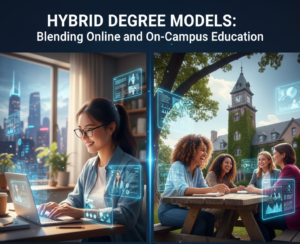
Within the past few years, one of the most major shifts that has taken place is the proliferation of online and hybrid learning. Because of the proliferation of digital platforms and virtual classrooms, education is now more readily available to students all over the world. These days, a great number of educational institutions provide degrees that can be earned entirely online or through a combination of in-person and online studying. Students can learn at their own speed, maintain a healthy balance between their work and their studies, and gain access to a high-quality education regardless of where they are located.
2. Make Learning One’s Lifelong Priority
Learning is not something that stops after graduation in today’s employment environment, which is constantly subject to change. A growing number of professionals are going back to school in order to improve their abilities, acquire micro-credentials, or investigate new areas of work. In response, educational institutions of higher learning are providing continuing education programs, online courses, and credentials that are only valid for a short period of time. Since technology is reshaping industries and new jobs are emerging, it has become vital to continue learning throughout one’s life.
3. Placement of Capabilities Prior to Degrees
Employers are progressively placing a higher value on practical abilities. These skills include communication, teamwork, and computer literacy. Traditional degrees are becoming less important. The curriculums of colleges and universities are being modified to include a greater emphasis on real-world applications, internships, and project-based learning. The rise of competency-based education has made it possible for students to advance in their education by acquiring specific abilities rather than by completing a certain amount of hours in the classroom.
4. Integration of Technology and Artificial Intelligence in the Fourth Position
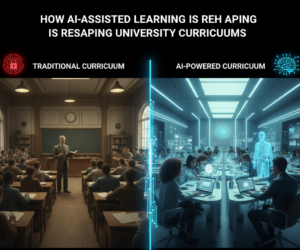
The field of higher education is undergoing a transformation as a result of artificial intelligence (AI), data analytics, and virtual reality. Tools that are powered by artificial intelligence have the ability to tailor learning experiences, automate administrative duties, and offer students with feedback in real time. Through the provision of hands-on simulations and immersive experiences, virtual and augmented reality are playing a significant role in the advancement of professions such as medicine, engineering, and design. The use of technology is no longer merely a complement; rather, it is becoming an essential component of the learning process.
5. The Emergence of International and Intercultural Education
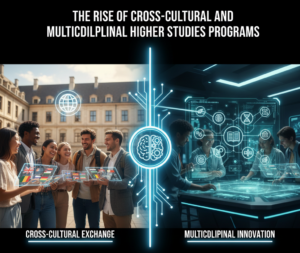
Education at the higher level is getting more and more international. The ability to participate in worldwide programs without having to leave their home countries is increasingly available to students, and universities are developing global collaborations in order to share resources and experience. Students from a variety of cultural backgrounds are encouraged to work together through cross-cultural education, which helps graduates become better prepared to operate in workplaces that are both diverse and international.
6. The Increasing Significance of Mental Health and the Overall Well-Being of Students
As the demands of academics and the pressures of digital technology continue to climb, mental health has emerged as a prominent emphasis in higher education. Counseling services, wellness programs, and awareness campaigns around mental health are all being expanded at colleges and universities. A growing number of people are coming to the realization that the success of students is dependent not only on their intellectual achievement but also on their emotional equilibrium and their entire well-being.
7. Responsibility to the community and environmental integrity
The key ideals of sustainability, diversity, and social impact are becoming more accepted by educational institutions worldwide. Through initiatives such as socially conscious curricula and environmentally conscious campuses, educational institutions are teaching students to face global concerns like as inequality and climate change. There is a movement occurring in higher education toward generating individuals who are not only proficient professionals but also conscientious citizens and problem solvers.
8. Education that is both individualized and data-driven
Colleges are now able to evaluate student data with the assistance of technology, which allows them to comprehend learning patterns and personalize education to the specific requirements of each student. Students can improve their areas of weakness and concentrate on their strengths with the assistance of personalized learning routes. Learning environments that are more effective, helpful, and adaptable to the pace and goals of each individual student are being created as a result of this trend.
9. Collaboration Between Industries and Educational Institutions
There is a narrowing of the gap between universities and the employment market (job market). A great number of organizations are forming partnerships with businesses in order to develop programs that are tailored to the requirements of the present labor force. Opportunities for mentorship, internships, and co-op programs are becoming increasingly important components of the educational experience. Students are guaranteed to graduate with both academic knowledge and practical experience thanks to this collaborative effort.
10. Enhanced Accessibility and Inclusion in the Workplace
In the future of higher education, diversity and inclusion will be at the forefront of the conversation. Policies at colleges and universities are being reshaped as a result of efforts to broaden access for students from low-income homes, students with impairments, and students from underrepresented groups. Education is becoming more equal and inclusive than it has ever been before thanks to the proliferation of online resources, flexible learning options, and scholarship opportunities.
Learners are entering a new era of education.
What lies ahead for higher education is one that is not only digital but also profoundly human. Universities have to adjust in order to fulfill the ever-evolving requirements of both students and the workforce as technology continues to improve and society continues to change. There is a transition occurring in the emphasis from traditional degrees to learning that continues throughout one’s life, from memorization to the development of skills, and from isolated classrooms to worldwide collaboration. The aforementioned developments indicate not only a change in the educational system, but also a rethinking of the ways in which knowledge is generated, disseminated, and utilized. If we live in a society where education is not only continuous but also connected and available to everyone, then the next generation of students will flourish.